
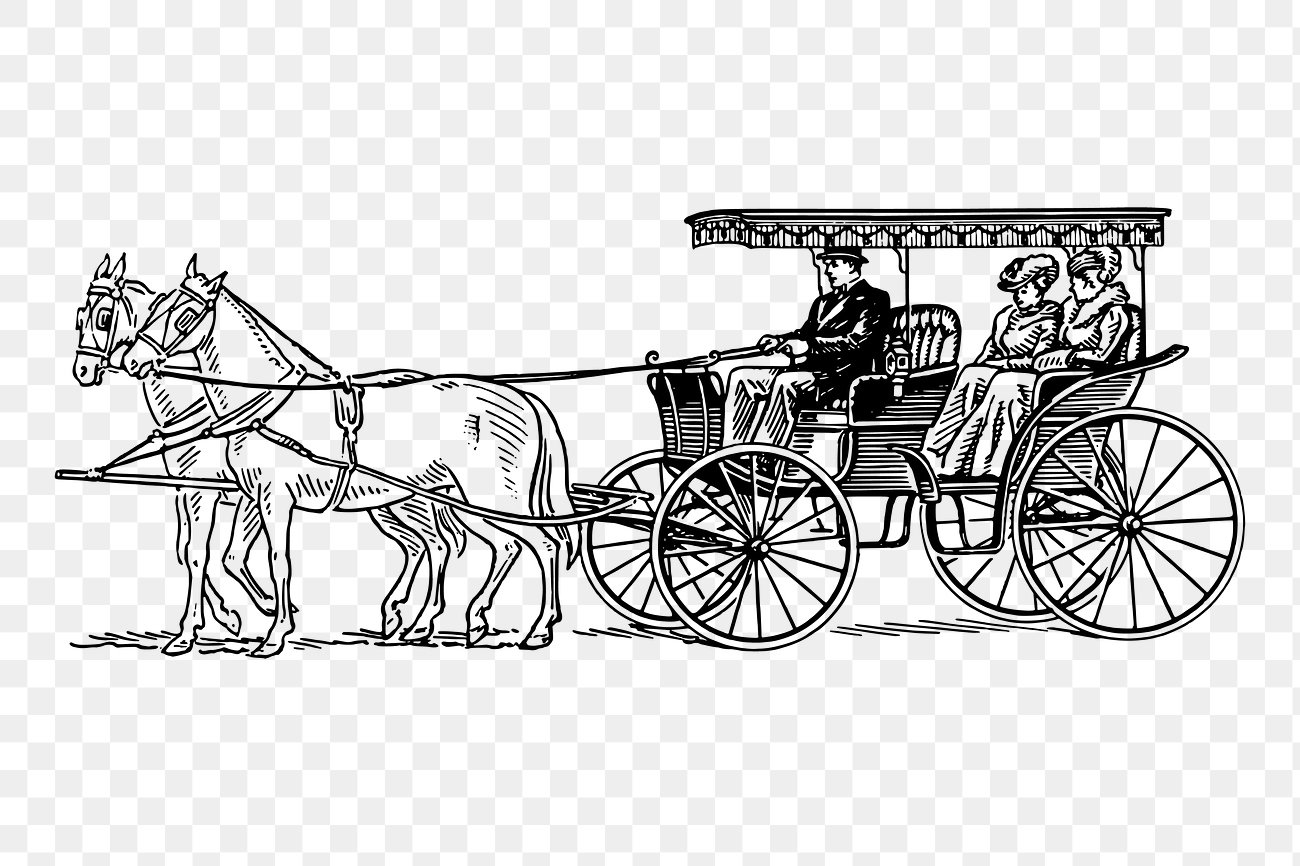
Nearly 140 years have passed since Herr Benz traded in his pony for a tank of gasolene and changed the world of commuting for ever. Auf wiedersehen pet and guten Tag petrol. Whilst life has changed in many ways since the 1880’s, the essential design of the modern car remains surprisingly similar to a Victorian horse cart. It is still (mostly) powered from the front, passengers sit in a similar configuration and headlights are just a more dazzling version of, well, headlamps. Essentially a car is just a cart pulled by four-cylinders instead of four legs. Powered by hydrocarbons instead of carbohydrates. Producing pollution instead of poo-llution.
There are now just over 34 million cars in the UK[i] and more than two-thirds of those worker bees who haven’t been infected by the WFH bug currently commute by car.[ii] Despite this, cars are actually phenomenally underutilised, not only spatially (most are designed to take a large family to Provence for three weeks but often contain a single occupant[iii]) but also temporally by spending only 4% of their time in motion.[iv] Basically they are bulky, unattractive metal sculptures for 96% of the time (unless you have a tiny pale green Fiat, in which case you have a small, cute metal sculpture for most of the time). With the end in sight for fossil fuels the solution to the issue of petrol cars is thought to be electric cars but there are still issues around these large vehicles themselves which are not addressed by simply altering their power source.
Environmental cost of batteries
It’s an irony that the creation of batteries requires tons of energy and rivers of water in order to mine the minerals needed (mostly lithium, cobalt and nickel). The process also releases tons of CO2 – oops! It is estimated that the production of electric cars emits about twice the carbon that is emitted by the production of petrol cars which then takes about 8 years of use to recoup.[v] It is likely that future vehicles will be powered by superior batteries to those currently (ahem) available but for now the lithium-ion battery is positively (ahem) flying off the shelves.
Vehicle weight and road damage
You may be lucky enough to live in a country without potholes but here in the UK the winter Olympians have been using them for slalom practice as they are ubiquitous, plentiful and unavoidable (potholes, not winter Olympians, at least not in Somerset). It turns out if you aren’t any good at slalom then you risk needing a new rear axle (that was my Mum) or getting a puncture (also my Mum). Okay, so my Mum’s rubbish at slalom. Or Devon (where she lives) just has really awful potholes. See my other piece about the costs we all bear due to the deterioration of our public services since 2010.
Back to cars. It is a well-known phenomenon that cars have been expanding in every direction since the new millennium began. So-called carspreading has resulted in cars that have grown by more than 19cm in length and 10cm in width between 2001 and 2020. Cars have also grown taller and heavier. Since 2018 cars have increased from an average weight of 1,365kg to 1,592kg.[vi] Electric cars can be about half a ton heavier than petrol cars due to their batteries. This creates a weighty problem (sigh) for those in the business of road maintenance. Estimates vary but it is thought that heavier vehicles cause at least twice as much damage to roads as lighter ones. And we’re all paying for that.
Our inactivity crisis
Humans are gradually moving less and there is a real risk of us all turning into blobs of jelly (no research citation available). According to actual research nearly 40% of people in the UK fail to take the recommended amount of exercise[vii] which makes them 20-30% more likely to suffer a premature death due to heart disease, stroke, diabetes or some cancers.[viii] That really is a lot of premature death. Car commuters in the UK have been shown to have a 20% higher chance of dying over a 20 year period compared to cyclists – and a 10% higher chance of dying than those who travelled by train.[ix Yes even the stress caused by delayed trains is compensated by the additional bodily movement required in order to use public transport. Olivia Newton John instructed us to get physical back in the 1980’s and that slogan is the (ahem) one that we want.
Should we be making cars smaller and not bigger?
Of course many people will argue that they need a large car to satisfy all their daily demands and that’s fine. You carry on (and whatever else you need to carry). But for others, who don’t need all the additional space and are only travelling a few miles each day there are other options which could be encouraged and supported. If we started from scratch (though I hate to use the word scratch in the same sentence as the word Porsche) would we create a Porsche Cayman for one person to drive to their office every day? As Herr Benz would say, nein.
Smaller cars seem obvious in terms of road and parking space, damage to road surfaces and road safety. But by all account they just haven’t caught on yet. Smart but somehow not Smart enough. Their first tiddly two-seater was launched back in 1998. Ironically, at a time when many cars weren’t much bigger anyway. Designed to park perpendicular to other non-Smart (scruffy/stupid) cars (though it’s never been clear if this is permitted in the UK), the original Smart car is only 2.5m long and 1.5m wide. Eye-catching when launched, it still behaves like a conventional car (it requires a driver’s licence, insurance and road tax) and many other innovative travel solutions have since been created (see here for a fleet of weeny machines).
It is clear that without some encouragement people will stick with their current commuting beasts.
Read here for seventeen suggestions for alternative modes of transport and here for 10 ways to encourage the use of tiny vehicles. From whinny, whinny to win, win in the space of 140 years.
Think I’m c(a)razy? Please comment below.
[i] https://www.gov.uk/government/statistics/vehicle-licensing-statistics-2024/vehicle-licensing-statistics-united-kingdom-2024#licensed-vehicles
[ii] 68% in 2022; Department of Transport Statistics; https://www.gov.uk/government/statistics/transport-statistics-great-britain-2023/transport-statistics-great-britain-2022-domestic-travel
[iii] https://mobilityways.com/2023-commuter-census-an-executive-summary
[iv]https://www.racfoundation.org/wp-content/uploads/standing-still-Nagler-June-2021.pdf
[vi] https://www.bbc.com/news/articles/cy7vdvl2531o
[ix] https://www.thelancet.com/journals/lanplh/article/PIIS2542-5196%2820%2930079-6/fulltext
Leave a Reply